How Physical AI Works and Why It Matters Today
How Physical AI Works and Why It Matters Today
Artificial intelligence is no longer limited to software that processes text, images, or data. Physical AI brings intelligence into the real world by allowing machines to observe their surroundings, make decisions, perform actions, and improve through experience. This technology combines advanced AI models with physical systems, creating machines that can interact with people and their environment in more capable and flexible ways.
Understanding Physical AI
Physical AI refers to AI systems that operate in real environments instead of existing only in digital applications. These systems combine artificial intelligence with sensors, cameras, actuators, and control systems that enable machines to understand what is happening around them and respond appropriately. Unlike traditional automated machines that follow fixed instructions, Physical AI allows systems to recognise situations, make informed decisions, and adapt to changing conditions. This makes them suitable for tasks that require greater flexibility than conventional automation.
How Physical AI Differs from Traditional Robotics
Earlier robots were designed to perform repetitive tasks in controlled environments. They followed predefined rules and could complete the same operation repeatedly with little variation. While effective for routine work, they struggled when unexpected situations occurred. Physical AI changes this approach by giving robots a broader understanding of their surroundings. Using advanced language, vision, and reasoning models, these machines can interpret different situations, adjust their actions, and apply knowledge across multiple tasks instead of relying only on programmed instructions.
Beyond Individual Robots
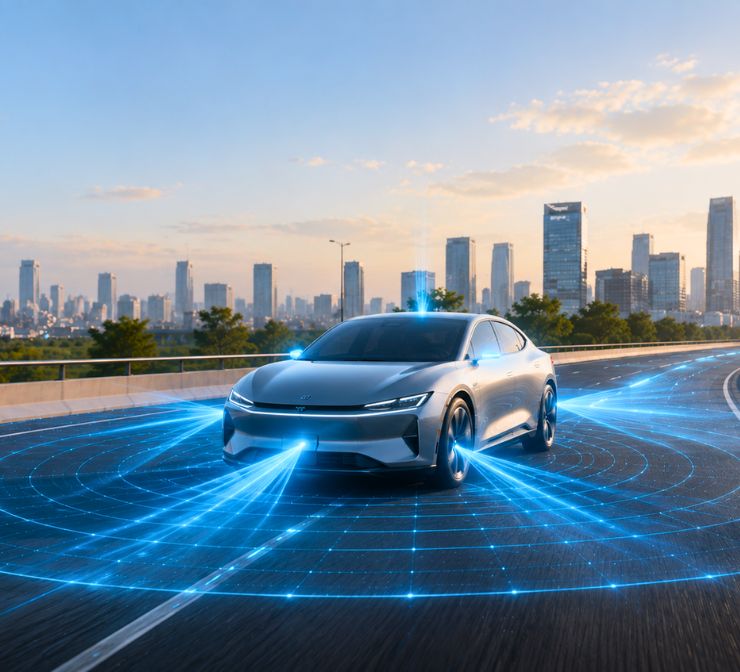
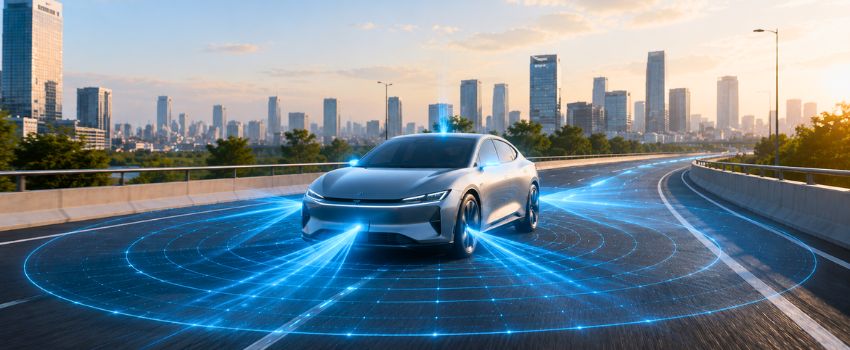
Physical AI is not limited to robotics. The technology can improve many systems that operate in the physical world. Factories can use AI to optimise production and monitor equipment. Energy networks can become more efficient by adjusting to changing demand. Automated vehicle fleets can improve navigation and coordination, while healthcare systems can support complex medical procedures. Any physical system that collects information and performs actions has the potential to benefit from AI.
Why Physical AI Is Growing Rapidly
Several technological advances have made Physical AI more practical. Modern AI models can recognise objects, understand spaces, and apply what they have learned to different environments. At the same time, highly realistic computer simulations allow developers to train machines safely before deploying them in real situations. Improved computing power, advanced graphics processors, and larger data centres have also made large scale AI training possible.
In addition, better sensors, lighter materials, faster communication systems, and edge AI technology have significantly improved the capabilities of modern machines. These developments have accelerated innovation in autonomous vehicles, industrial automation, healthcare robotics, and many other industries.
The Future of Physical AI
Physical AI represents an important step in the evolution of artificial intelligence. By combining intelligent software with physical machines, it enables systems to understand, decide, act, and continuously improve through real world experience. As AI models, simulation technologies, computing infrastructure, and robotics continue to advance together, Physical AI is expected to become an increasingly important part of manufacturing, transport, healthcare, energy, and many other sectors.
FAQs
1. What is Physical AI and how does it work?
Physical AI is artificial intelligence that enables machines to understand, decide, and act in the real world. It combines AI models with sensors, cameras, actuators, and control systems so machines can collect real time data, make decisions, and improve through experience.
2. What is the difference between Physical AI and traditional robotics?
Traditional robotics relies on fixed programming to perform repetitive tasks, while Physical AI allows AI powered robots to understand their surroundings, adapt to changing conditions, and make intelligent decisions. This makes Physical AI suitable for more complex real-world applications.
3. What are the main applications of Physical AI?
Physical AI applications include autonomous vehicles, smart factories, industrial automation, healthcare robotics, intelligent energy systems, and other connected physical systems that require real time decision making and automation.
4. Why is Physical AI becoming important for autonomous vehicles and smart factories?
Physical AI helps autonomous vehicles navigate safely by processing data from multiple sensors in real time. In smart factories, it improves automation, equipment monitoring, production efficiency, and operational decision making by enabling machines to respond intelligently to changing conditions.
5. What is the future of Physical AI?
The future of Physical AI is expected to expand across manufacturing, transportation, healthcare, logistics, and energy systems. As AI models, sensors, simulation technology, and computing power continue to improve, intelligent machines will become more capable of operating safely and efficiently in real world environments.
Latest Posts